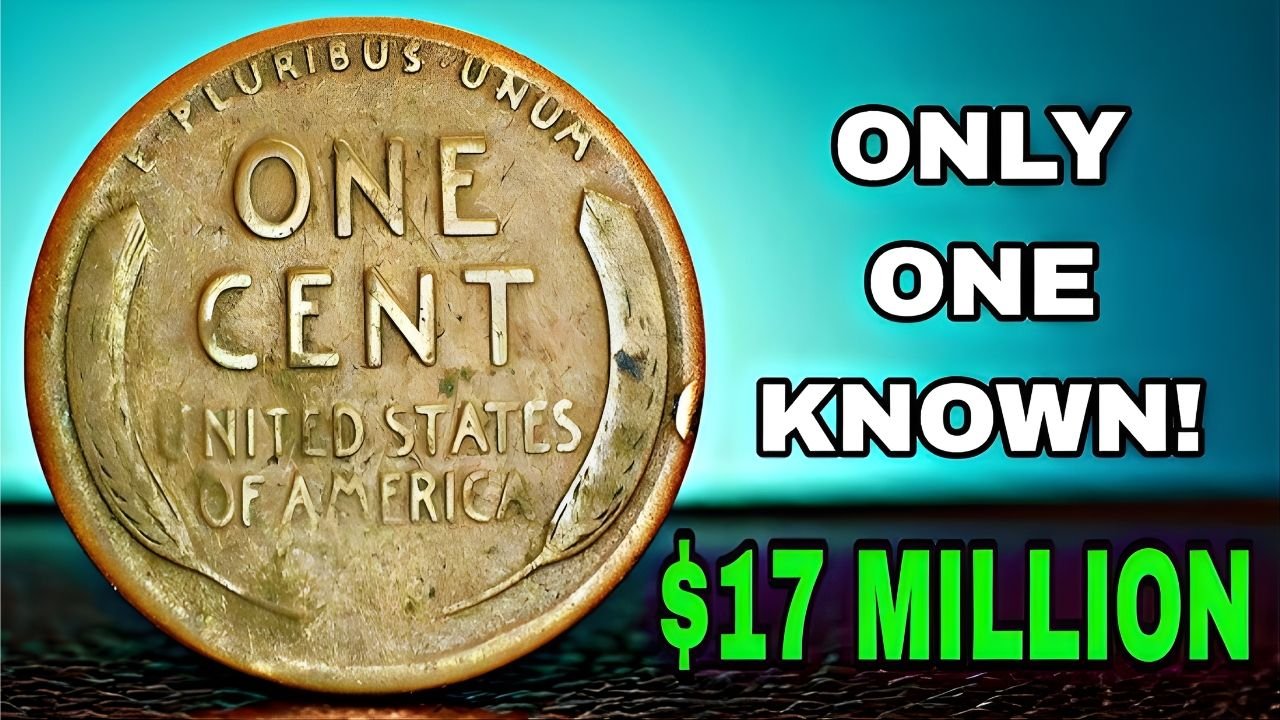

If you’ve ever emptied your coin jar or found an old penny tucked in a drawer and wondered if it might be worth more than its face value, you’re not alone. The Wheat Penny—a small copper coin minted between 1909 and 1958—has become one of the most fascinating collectibles in American numismatic history.
Over the last two decades, the Wheat Penny has proven that even humble coins can defy market expectations. What was once everyday pocket change now stands as a symbol of history, rarity, and financial growth. From its early days celebrating Abraham Lincoln’s 100th birthday to today’s record-breaking auction prices, the journey of the Wheat Penny is a story of endurance and rediscovery.
A Quick Introduction to the Wheat Penny
The Wheat Penny was introduced in 1909 to commemorate Abraham Lincoln’s 100th birthday. Designed by Victor David Brenner, it became the first U.S. coin to feature a real person. The obverse shows Lincoln’s iconic profile, while the reverse features two wheat stalks symbolizing prosperity—hence the nickname “Wheat Penny.”
Between 1909 and 1958, billions were minted in Philadelphia, Denver, and San Francisco. However, not all Wheat Pennies are equal. Some rare dates, mint errors, and pristine high-grade examples are worth hundreds—or even thousands—of dollars today.
The Rise of Wheat Penny Value: 2005 to 2025
From 2005 to 2025, the Wheat Penny market saw incredible appreciation. Twenty years ago, collectors were still finding them in circulation. Today, those finds are rare—and the value of the right coin can be life-changing.
Several factors fueled this growth:
- Increased collector education through online communities
- High auction exposure for rare variants
- Shrinking supply of top-grade coins
- Nostalgia from younger generations rediscovering family collections
- Investment diversification into tangible assets like rare coins
This surge in interest made the Wheat Penny one of the most stable and rewarding entry points in coin collecting.
Comparing Then vs. Now: The 20-Year Value Boom
| Year / Variety | Estimated Value (2005) | Estimated Value (2025) |
|---|---|---|
| 1909-S VDB | $700–$2,500 | $900–$10,000+ |
| 1914-D | $300–$3,000 | $400–$15,000+ |
| 1922 No-D | $500–$5,000 | $700–$20,000+ |
| 1931-S | $35–$500 | $80–$1,500+ |
| 1943 Bronze | $40,000–$150,000 | $100,000–$500,000+ |
| 1955 DDO (Doubled Die) | $600–$6,000 | $1,200–$25,000+ |
Even mid-range Wheat Penny varieties have appreciated significantly. Coins that once fetched $50 may now sell for several hundred, especially when graded by PCGS or NGC in mint condition.
The Most Iconic Wheat Pennies
1909-S VDB – The First and Most Famous
This coin marks the birth of the Wheat Penny series. The initials “VDB” (Victor David Brenner) on the reverse caused controversy, leading to early withdrawal. Only 484,000 were minted, making it one of the most sought-after coins in American history.
1914-D – The Hidden Giant
With fewer than 1.2 million minted, the Denver Wheat Penny from 1914 remains a key rarity. In high grades, this penny easily breaks the $10,000 mark.
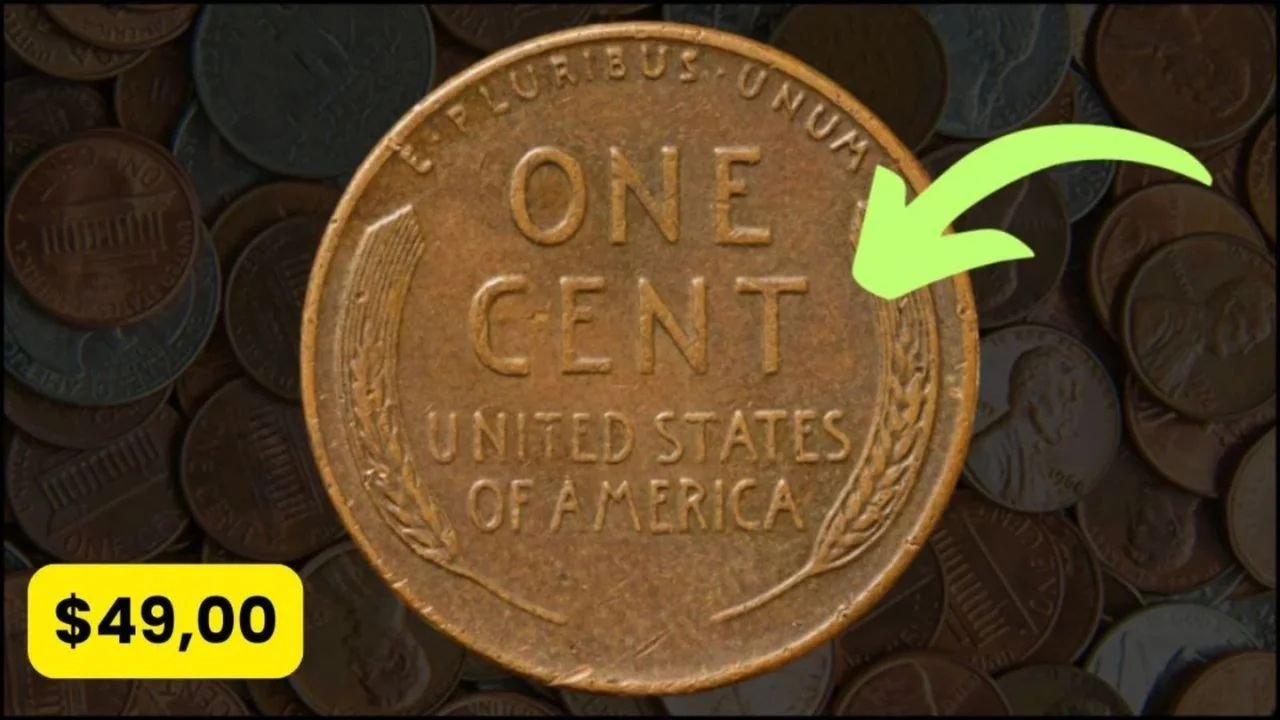
1922 No-D – The Mintmark Mystery
Struck in Denver, but missing the “D” mintmark due to a filled die, this error became one of the most famous varieties ever. Collectors prize it for its uniqueness and mystery.
1943 Bronze – The Accidental Treasure
In 1943, most pennies were made of steel due to wartime copper shortages. A few copper blanks accidentally got struck, creating the legendary bronze Wheat Penny—now worth hundreds of thousands.
1955 Doubled Die – The Collector’s Dream
The 1955 Wheat Penny shows bold doubling on “LIBERTY” and “IN GOD WE TRUST.” Its dramatic visual makes it one of the most recognizable and valuable error coins ever produced.
Also Read – $2,000 Direct Deposit in November 2025 – Eligibility, Payment Schedule & IRS Guidelines
The Power of Mint Errors
Mint errors are the heartbeat of the Wheat Penny market. These are coins with production flaws that make them unique—and often far more valuable.
Common and profitable error types include:
- Doubled dies (like the 1955 DDO)
- Off-center strikes
- Wrong-metal planchets (like the 1943 bronze)
- Die cracks and cuds
- Misplaced mintmarks
Collectors love error Wheat Pennies because they combine rarity, mystery, and history in one small copper disc.
The “Defied the Odds” Wheat Pennies
Some coins didn’t just survive — they became icons:
- 1943 Bronze Wheat Penny: Worth up to $500,000, this wrong-metal strike remains one of America’s most valuable coins.
- 1922 No-D Wheat Penny: A simple missing letter transformed an ordinary penny into a collector’s grail.
- 1955 Doubled Die Wheat Penny: Its vivid doubling error is so popular it’s known even by non-collectors.
These coins didn’t just defy expectations—they rewrote the rules of coin collecting.
The Importance of Condition
In coin collecting, condition is everything. The same Wheat Penny can vary in value by hundreds—or thousands—of dollars based on its grade.

A circulated 1914-D Wheat Penny might bring $400, but a flawless uncirculated (MS-65) version can exceed $15,000.
Collectors look for:
- Original color: Red-toned copper commands a premium.
- Sharp detail: Clear lettering and defined wheat stalks matter.
- Minimal marks: Fewer scratches mean higher grades.
Never clean your Wheat Pennies—doing so destroys the natural patina and drastically lowers value.
Where to Find Wheat Pennies Today
Believe it or not, valuable Wheat Pennies are still out there waiting to be discovered. You can find them in:
- Old coin jars and piggy banks
- Estate sales and garage sales
- Bank rolls or coin machines
- Family collections passed down generations
Each search feels like a treasure hunt. Every handful of pennies could hold something rare—maybe even a piece of history worth thousands.
Tips for New Wheat Penny Collectors
If you’re just starting, here’s how to make the most of your Wheat Penny journey:
- Start small: Focus on learning rather than spending big.
- Use quality storage: Store coins in PVC-free holders to prevent corrosion.
- Don’t clean coins: Preserve their natural luster.
- Learn grading basics: The higher the grade, the higher the value.
- Join collector communities: Forums and social media groups can guide your next big find.
Coin collecting doesn’t have to be expensive—it’s about curiosity, patience, and the joy of discovery.
The Wheat Penny Market Outlook Through 2030
Experts predict the Wheat Penny market will remain strong for years to come. As more high-grade examples disappear into private collections, prices will continue to rise.
Key reasons for this growth include:
- Shrinking supply of well-preserved coins
- Younger generations entering the hobby
- Record-setting auction prices driving attention
- Increased public awareness through digital media
Coins like the 1955 DDO, 1922 No-D, and 1943 Bronze are expected to lead value growth into the next decade.
Final Thoughts
The Wheat Penny represents more than just an old coin—it’s a story of resilience, history, and timeless value. Over the last 20 years, it’s evolved from forgotten pocket change to a highly sought-after collectible.
These coins connect us to America’s past—its wars, industries, and everyday people. And in an age of digital currency, holding a century-old Wheat Penny feels like holding a piece of living history.
Whether you’re a seasoned collector or someone just discovering the world of coins, the Wheat Penny offers something everyone can appreciate: the thrill of finding hidden value in the smallest places.
So next time you come across an old penny, take a closer look—it might just be your ticket to uncovering a tiny copper treasure.
FAQs
Q1: Are all Wheat Pennies valuable?
No, common dates are usually worth only a few cents unless in high grade or with errors.
Q2: What makes a Wheat Penny valuable?
Rarity, condition, mint errors, and historical significance determine its worth.
Q3: Should I clean my old Wheat Pennies?
Never. Cleaning removes patina and damages the coin’s value.
Q4: Are Wheat Pennies still found in circulation?
Rarely, but you can still find them in old jars, rolls, and collections.
Q5: What is the most valuable Wheat Penny?
The 1943 bronze Wheat Penny, which can sell for over $500,000 in top condition.
Some Important Link
| Download News APP | Click Here |
| WhatsApp Group | Click Here |
| Home Page | Click Here |