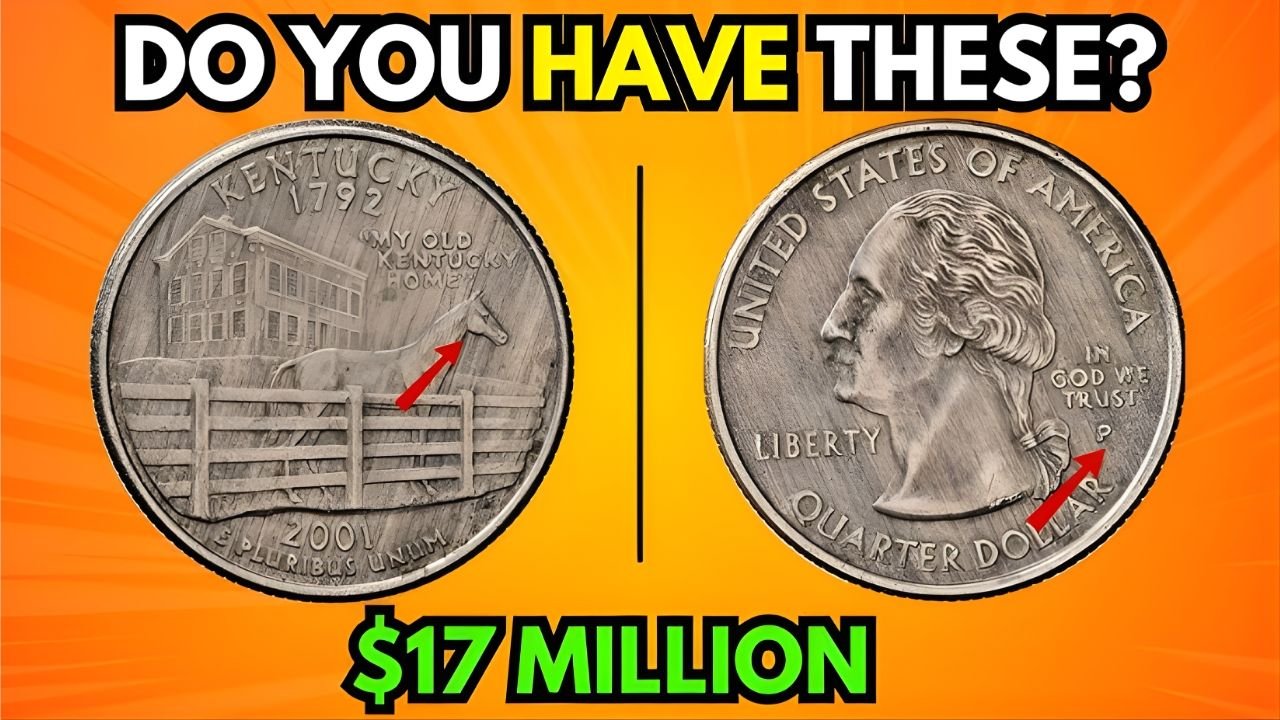

If you’ve ever emptied your pockets or coin jar and wondered whether one of those shiny quarters might secretly be worth hundreds—or even thousands—of dollars, you’re not alone. The State Quarters program, launched in 1999 and completed in 2008, turned millions of ordinary Americans into casual coin collectors. Now, in 2025, that same excitement is back—only this time, some of those familiar coins have become genuinely valuable treasures.
From fascinating minting errors to rare varieties and pristine high-grade examples, State Quarters have become one of the hottest collectibles in U.S. numismatics. This detailed guide explores why they’re valuable, how to spot rare ones, and which quarters to keep an eye out for this year.
What Made the State Quarters Program So Special
The State Quarters program was more than just a redesign—it was a cultural phenomenon. For the first time in U.S. history, every state received its own quarter, celebrating its heritage, landmarks, and history.
Launched by the U.S. Mint in 1999, the initiative ran for ten years and released 50 unique designs—one for each state—making it the largest coin series ever issued by the Mint.
Each State Quarter features:
- George Washington’s portrait on the obverse (front)
- A state-specific design on the reverse (back)
- Mintmarks from either Philadelphia (“P”) or Denver (“D”)
While hundreds of millions were minted, certain error quarters, rare die varieties, and uncirculated examples have become surprisingly valuable today.
Why State Quarters Have Skyrocketed in Value
Over time, several factors have contributed to the growing market for State Quarters:
- Rarity in High Grades: Coins that were never circulated or have remained in pristine condition are now scarce. Collectors are willing to pay top dollar for these.
- Minting Errors: Unique manufacturing flaws—such as double strikes, off-center prints, and extra leaves—add huge value.
- Social Media Hype: Platforms like YouTube, Reddit, and TikTok have revived interest in coin collecting, especially among younger audiences.
- Increased Investor Interest: Modern coin investors are diversifying beyond gold and silver into rare U.S. currency.
- Nostalgia Factor: Many collectors who started as kids during the original program are now rediscovering their childhood collections.
Simply put, State Quarters have evolved from pocket change into pieces of Americana with investment potential.
Top 10 Most Valuable State Quarters in 2025
Here’s a breakdown of the State Quarters that are making waves in the 2025 coin market. Even if you’re new to collecting, these are the coins to hunt for:
| State & Year | Why It’s Special | Approx. Value Range (2025) |
|---|---|---|
| 2004-D Wisconsin | Features an “extra leaf” under the corn stalk – two known varieties (“high leaf” and “low leaf”) | $200–$1,500+ |
| 2005 Minnesota | Features “extra trees” on the reverse from doubled die strikes | $250–$800 |
| 1999 Delaware | Known for the “spitting horse” die break between the horse’s mouth and the letter “E” | $150–$500 |
| 2005 Kansas | “In God We Rust” error due to a weak minting die | $100–$600 |
| 2003 Illinois | Noted for double strikes and off-center errors | $300–$900 |
| 2006 Colorado | Reverse doubling varieties spotted in limited runs | $50–$300 |
| 2008 Hawaii | Final State Quarter with low circulation numbers | $60–$300 |
| 2003 Maine | Minor doubling errors and clean uncirculated examples fetch a premium | $75–$450 |
| 1999-P Pennsylvania | Early mint issues in high grades bring strong collector demand | $150–$500 |
| 2008 New Mexico | Missing design details and die polish lines | $50–$300 |
Pro Tip: Always check both sides of a coin carefully—tiny imperfections can make a massive difference in value.
Also Read – $2,000 Direct Deposit in November 2025 – Eligibility, Payment Schedule & IRS Guidelines
How to Identify Valuable State Quarters
Spotting a valuable State Quarter doesn’t require expensive tools—just patience, a keen eye, and a little knowledge.
Look for These Key Signs:
- Extra markings: Extra leaves, lines, or design elements not found on regular coins.
- Doubling: Letters, numbers, or parts of the image appear slightly doubled.
- Die cracks: Small raised lines or blobs caused by cracks in the coin die.
- Missing details: Weak or faded text and designs may indicate striking errors.
- Off-center strikes: Design shifted away from the center of the coin.
Using a simple magnifying glass or a coin loupe helps reveal these fine details easily.
Where to Find Rare State Quarters
You don’t need to be a seasoned collector to start finding State Quarters worth money. You can discover them in everyday places:
- Your pocket change or cash register returns
- Coin jars or piggy banks lying around the house
- Bank roll bundles (exchange for rolls of quarters and search them)
- Garage sales or estate collections
- Online auctions or coin forums where sellers often don’t know what they have
It’s a modern-day treasure hunt—and the thrill of finding one makes it all the more rewarding.
The Most Famous Error: The Wisconsin “Extra Leaf” Quarter
No conversation about State Quarters is complete without mentioning the legendary 2004-D Wisconsin Extra Leaf error.
Two distinct versions exist:
- High Leaf: A leaf appears above the left corn leaf.
- Low Leaf: A leaf appears below it.
These subtle errors skyrocketed the coin’s fame, with uncirculated versions selling for over $1,500. Even circulated examples can easily fetch $200–$500, depending on condition.
If you only have time to hunt for one coin, make it this one.
2025 Market Trends for State Quarters
The State Quarters market in 2025 is stronger than ever. Here’s what’s driving it:
- Younger collectors are entering the hobby through digital communities.
- Certified coins graded by PCGS or NGC are achieving record prices.
- Error varieties—especially doubling and off-center strikes—are rising in value.
- Limited high-grade supply is creating scarcity.
Experts predict this upward trend will continue, particularly for coins in MS65 grade and above, where only a few hundred examples might exist per variety.
Should You Build a Full 50-State Set?
Building a full 50-state collection can be fun, educational, and surprisingly affordable. However, if your goal is investment or profit, focus on:
- Error coins like the Extra Leaf Wisconsin and “In God We Rust” Kansas quarter
- Low-mintage examples from 2008 (Hawaii, Alaska, New Mexico)
- Certified high-grade pieces from trusted grading services
A complete set makes a great display, but the big profits come from rare varieties and exceptional grades.
Grading and Preserving Your Coins
Condition—or grade—is everything when it comes to coin value. Professional grading services like PCGS (Professional Coin Grading Service) or NGC (Numismatic Guaranty Company) use a scale from 1 (poor) to 70 (mint state).
Here’s a quick breakdown:
- MS60–70: Uncirculated, perfect or near-perfect.
- AU50–59: Light wear, retains much of its luster.
- XF40–49: Moderate wear with visible details.
- VG–F: Heavy wear but date and design visible.
To preserve your State Quarters, always store them in:
- Acid-free coin holders or flips
- Air-tight capsules for long-term protection
- Avoid cleaning them—scratches destroy collector value instantly.
Why State Quarters Matter Beyond Money
Beyond the profits and collectibles, State Quarters hold emotional and historical value. Each coin tells a story—whether it’s Alaska’s grizzly bear, New York’s Statue of Liberty, or California’s John Muir.
For many families, collecting these coins became a generational tradition—a tangible way to connect kids with U.S. geography, history, and culture. Even in 2025, the fascination hasn’t faded.
Holding a State Quarter isn’t just about owning metal—it’s about holding a piece of America’s legacy.
Final Thoughts
The State Quarters program may have ended years ago, but its legacy keeps growing. These coins bridge history and modern collecting, offering excitement to both casual hobbyists and serious investors.
So next time you’re handed a quarter at the grocery store or dig through your change jar, take a closer look. That seemingly ordinary coin could be a rare State Quarter worth hundreds—or even thousands—of dollars.
Treasure hunting doesn’t always need a map. Sometimes, it starts with just 25 cents and a little curiosity.
FAQs
Q1: Are State Quarters still worth collecting in 2025?
Yes! Certain varieties and minting errors are increasing in value each year.
Q2: What’s the most valuable State Quarter?
The 2004-D Wisconsin “Extra Leaf” remains the top pick for collectors.
Q3: Should I clean my quarters before selling?
Never clean coins—it reduces their value permanently.
Q4: Where can I sell valuable State Quarters?
Try reputable online platforms like eBay, Heritage Auctions, or coin dealers certified by PCGS/NGC.
Q5: How do I know if my State Quarter is rare?
Look for minting errors, doubling, and high-grade shine—these make the biggest difference in value.
Some Important Link
| Download News APP | Click Here |
| WhatsApp Group | Click Here |
| Home Page | Click Here |